Video Production for Corporate: A Practical Guide for Wisconsin Brands

January 26, 2026
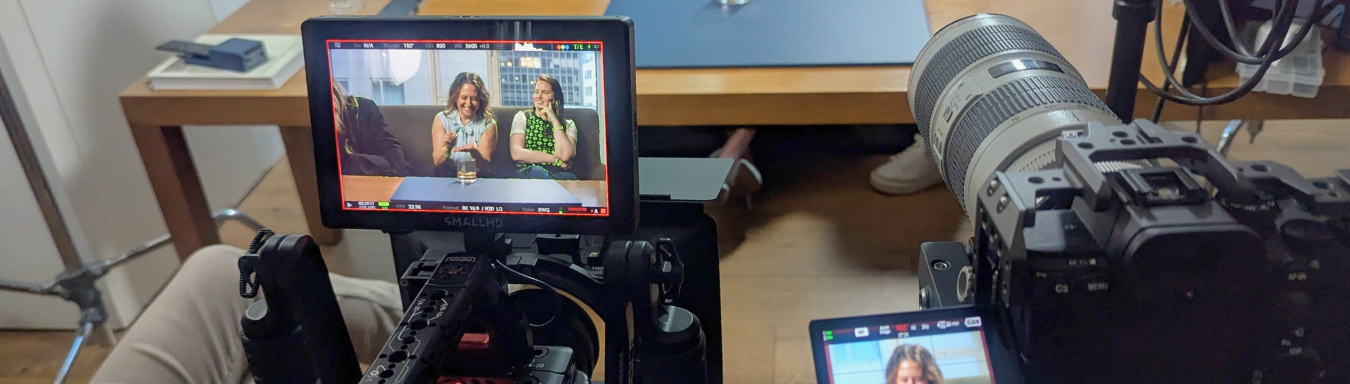
Introduction: Why Corporate Video Matters in 2026
Video isn’t optional anymore. It’s the way people want to consume information, make decisions, and connect with organizations, whether they’re researching a software vendor, deciding where to donate, or figuring out if your company is the right place to build a career. The numbers back this up: video now drives roughly 80% of consumer internet traffic, and 82% of consumers report video has helped increase web traffic or brand engagement.
For Wisconsin organizations specifically, corporate video production has become a core tool for standing out in competitive markets. Madison tech companies use brand videos to attract talent in a tight labor market. Milwaukee manufacturers create product demo videos to explain complex machinery to buyers across the country. Green Bay nonprofits produce fundraising appeal films that bring donor stories to life in ways a letter never could. Dioceses across the state stream Bishop addresses and stewardship campaigns to parishioners who can’t attend in person. This isn’t about keeping up with trends. It’s about meeting audiences where they already are.
At Backflip, we’re a Madison-based creative studio that’s spent years helping organizations across Wisconsin create video content that actually performs. We focus on story-driven corporate video production integrated with broader digital marketing and branding strategies. This guide is designed to walk you through what corporate video production really involves: the types of videos that serve different business objectives, the production process from concept to launch, realistic costs, distribution strategies, and how to choose a video production partner that fits your goals.
What Is Corporate Video Production?
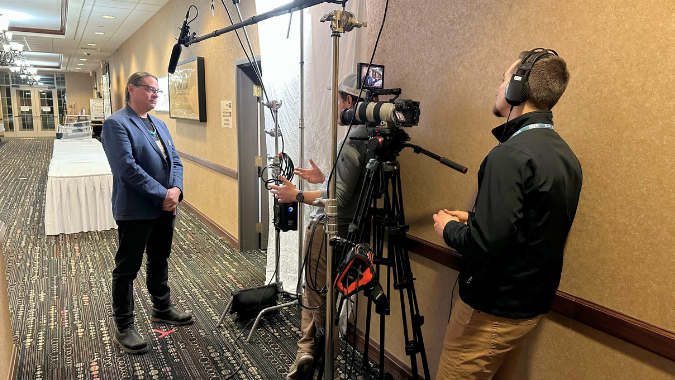
Corporate video production is, simply put, all video created by or for an organization to inform, persuade, train, or inspire specific audiences. Those audiences might be customers, donors, employees, investors, parishioners, or community members. Unlike entertainment or consumer media, corporate videos are built around achieving measurable outcomes: generating leads, boosting employee engagement, raising funds, or reinforcing brand identity.
Corporate video production spans every industry Backflip works with: B2B technology companies, nonprofits, dioceses and parishes, schools, healthcare systems, and manufacturers throughout Wisconsin and beyond. The common thread is that every video needs a clear purpose tied to organizational goals, not just something that “looks nice.”
Modern corporate videos are also multi-channel by design. A single video project might need to work on your homepage, in sales presentations, at a diocesan gala, across social media feeds, and embedded in email campaigns. Planning for these applications from the start, rather than treating them as afterthoughts, is what separates effective corporate videos from expensive shelf-sitters.
Core Types of Corporate Videos (With Concrete Examples)
Different video formats map to different business objectives. A brand awareness video serves a completely different purpose than a training module or a testimonial video, even if they share production quality standards. Understanding which video styles fit your goals is the first step toward creating videos that actually move metrics.
Each type below includes when to use it and a concrete example relevant to Wisconsin organizations. Most organizations benefit from building a small “video toolkit” of 3–5 formats that get reused, updated, and repurposed over 12–24 months rather than producing random one-offs that never connect to a larger video strategy.
Brand / Company Story Video
A brand video is typically a 60–180 second piece that introduces who you are, what you do, and why it matters. These often live on homepages, get shown in sales meetings, and play at events or conferences. The goal is to establish your brand story and create an emotional connection with viewers before they dive into specifics.
Example: A Madison-based tech startup needed a 2-minute brand film to use on their homepage and in investor presentations. The video was shot on location in Dane County, featuring leadership interviews, b-roll of the product in real-world use, and footage of the team collaborating. Instead of listing features, the film focused on the problem they set out to solve and the people behind the mission.
These story-first pieces also provide modular content—a 2-minute brand video can yield 15-second and 30-second social cuts, plus standalone interview clips for LinkedIn. At Backflip, we often design brand videos with these downstream uses in mind from the scripting phase.
Product Demos & Explainer Videos
Product demos (typically 60–120 seconds) show how a product or software works in realistic scenarios. Explainer videos simplify complex ideas, services, or systems for audiences who need clarity before they can move forward.
Example: A Milwaukee SaaS company needed an engaging explainer video for their landing page and sales emails. The video combined screen-captured walk-throughs with motion graphics to visualize data flows, all paced to hold attention and ending with a clear call-to-action: “Request a demo.”
Clarity and pacing are everything here. The best product demo videos don’t try to cover every feature. They highlight the 2–3 things that matter most to the target audience and make those crystal clear. When done right, explainer videos can live in retargeting ads and email sequences, driving measurable funnel performance over months of use.
Customer Testimonial & Case Study Videos
Testimonial videos (30–90 seconds, featuring one customer) and case study videos (2–4 minutes, with a full narrative arc and measurable results) are among the most effective tools for building trust with prospects.
Example: A Wisconsin credit union filmed a member in their home and branch environment, describing how a small business loan changed their situation. The video included specific metrics such as “cut processing time by 40%,” and closed with the member recommending the credit union to others in similar situations.
Authenticity matters more than polish here. Conversational interviews beat scripted testimonials every time. Relevant b-roll (the customer’s business, their team, the actual product in use) breaks up talking-head footage and adds visual proof. These videos perform well on sales pages, proposal decks, fundraising microsites, and targeted LinkedIn campaigns.
Training, Safety, and Onboarding Videos
Training videos are typically 3–10 minute modules that standardize processes, ensure compliance, and communicate company culture to new or existing staff. When done well, they reduce onboarding time by up to 60% compared to in-person-only training.
Example: A manufacturing facility in Janesville created a series of lockout/tagout safety videos in early 2025 to comply with updated OSHA guidance. Each module covered one procedure, with step-by-step visuals, on-screen checklists, and clear narration. The videos were chaptered for easy reference in the company’s LMS platform.
At Backflip, we often break long training content into short segments with graphic overlays and checklists for accessibility. This makes content easier to update when procedures change and easier for employees to reference specific sections without rewatching entire modules.
Recruitment & Culture Videos
Recruitment videos (60–120 seconds) showcase real employees, authentic work environments, and community impact. They live on careers pages, get embedded in job postings, and sometimes run as social media ads targeting talent in specific regions.
Example: A Madison nonprofit filmed “day in the life” profiles of case workers in March 2025 to support a hiring push. The videos featured unscripted moments, diverse team members, and real footage from their offices and community locations, not a staged corporate setting.
The key is showing company culture as it actually is, not an idealized version. Real locations, genuine employee voices, and moments that feel human rather than produced. We often align these videos with HR messaging and broader employer-brand content creation efforts.
Event, Fundraising, and Livestream Content
Corporate events, donor galas, diocesan appeals, and conferences all benefit from video support: opener videos to set the tone, highlight recaps for social sharing, and live or hybrid streaming for remote audiences.
Example: A 2025 diocesan stewardship appeal video was shot across multiple locations in Wisconsin, featuring parishioner stories and clergy messages. The Bishop’s address was livestreamed for those watching remotely, and a 90-second recap was delivered within 48 hours for social media and follow-up emails.
Quick-turn event videos are powerful for maintaining momentum. Getting content out while the experience is still fresh keeps audiences engaged and makes fundraising asks feel timely. Backflip offers multi-camera live streaming, branded graphics packages, and rapid post-event editing for these situations.
The Corporate Video Production Process (From Idea to Launch)
The corporate video production process follows three core phases—pre production, production, and post production—with a fourth phase we emphasize at Backflip: strategy and distribution planning. A clear process saves time, money, and headaches, especially when you’re coordinating multiple stakeholders like marketing teams, HR departments, leadership, or diocesan offices.
For a standard 2–3 minute video, expect 4–8 weeks from kickoff to final delivery. Multi-location shoots or multi-video campaigns may extend that timeline, but a structured approach keeps everything on track.
Strategy & Pre-Production
The decisions made in pre production determine about 80% of your project’s success and budget efficiency. This is where goals get defined, audiences get mapped, and the creative direction takes shape.
Key activities in this phase include:
- Discovery workshops to clarify objectives, KPIs, and key messages
- Audience and channel mapping to understand where videos will live and who needs to see them
- Scriptwriting that prioritizes story and emotional connection over feature lists
- Shot lists and storyboards that map every scene, camera angle, and transition
- Casting decisions—employees, customers, or talent who feel authentic on camera
- Location scouting across Wisconsin sites and scheduling that minimizes disruption
- Brand alignment to integrate existing visual identity, tone of voice, and any organizational guidelines
Backflip uses creative briefs, shared script documents, production calendars, and mood boards to keep everyone aligned. For complex projects, we’ll create storyboards that number each shot so stakeholders can visualize the final product before we ever pick up a camera.
Production: On-Location or In-Studio
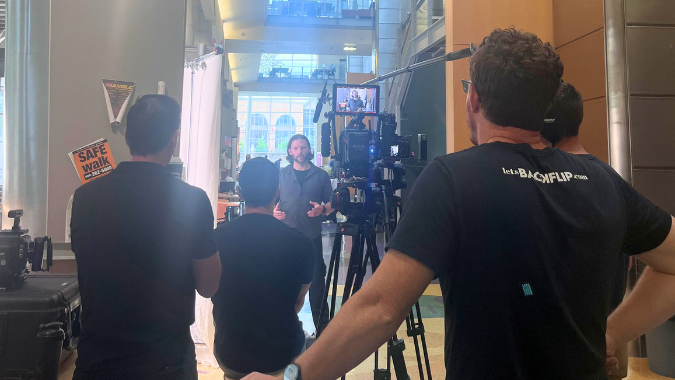
Production days are when raw footage gets captured. This is the visible part of video production (crews, cameras, lights, action), but it only works smoothly because of the planning that came before.
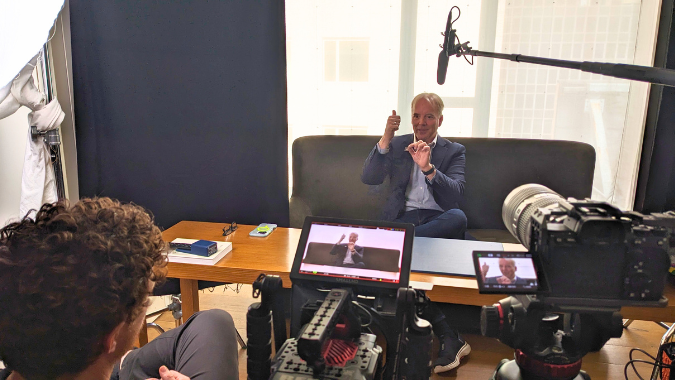
A typical corporate video shoot relies on a coordinated production team, with each role contributing to the quality and efficiency of the final result. The director or producer oversees the creative vision, manages talent performance, and keeps the shoot running smoothly from start to finish. The director of photography (DP) is responsible for operating the camera, framing shots, and ensuring consistent visual quality that aligns with the brand and story. Supporting the DP, the camera assistant manages camera equipment, handles lens changes, and keeps technical operations running without interruption. An audio technician ensures clear, professional sound by capturing dialogue and ambient audio using directional microphones and other recording tools. Finally, the gaffer designs and adjusts the lighting setup to create the right mood, maintain visual consistency, and ensure subjects are properly lit. Together, these roles form the backbone of a professional corporate video production, helping deliver polished, high‑impact results.
Location examples range from offices near Capitol Square in Madison to manufacturing floors in Janesville, church sanctuaries, healthcare facilities, and nonprofit community spaces. We handle permitting when needed, minimize disruption to operations, and share clear call sheets 3–5 days in advance so everyone knows what to expect.
Post-Production: Editing, Graphics, and Sound
Post production transforms raw footage into a finished, on-brand asset. This phase includes:
- Editing to assemble the best takes into a coherent narrative
- Color grading to adjust tones for emotional impact and brand consistency
- Motion graphics and animation for visual interest and clarity
- Sound design layering music, voiceover, and effects
- Captions and accessibility features for silent autoplay and ADA compliance
Backflip’s feedback process typically includes a first-cut review, consolidated notes from client stakeholders, and 1–2 revision rounds managed through an online review platform. We keep rounds focused and efficient to avoid scope creep while ensuring the final video meets everyone’s expectations.
Deliverables extend beyond the main edit:
- Vertical social cuts (9:16) for Instagram Stories and TikTok
- Square versions (1:1) for LinkedIn and Facebook feeds
- Captioned versions for silent autoplay
- A “content library” of extra b-roll and stills for ongoing use
How Much Does Corporate Video Production Cost?
Corporate video production cost varies widely based on scope, but here are realistic ranges for Midwestern markets in 2024–2025:
Cost is driven less by video length and more by factors like number of shoot days, locations, crew size, motion graphics complexity, and timeline. A 90-second video requiring three shoot days across multiple locations costs more than a 3-minute video shot in one afternoon at your office.
The right way to think about corporate video production services is investment and lifetime value. A well-produced brand video can be repurposed across channels for 12–24 months, generating leads, supporting sales conversations, and building brand awareness the entire time. Compare that to ad spend that disappears the moment you stop paying.
Backflip scopes projects through a discovery call, provides a rough budget range, then delivers a detailed proposal with line items for transparency. No mystery costs.
Key Cost Drivers to Consider
Major cost components include:
- Strategy and scripting – Discovery, creative development, scriptwriting
- Production days – Crew time, equipment, location access
- Travel – Within Wisconsin or neighboring states
- Talent – On-camera subjects, professional voiceover
- Post-production complexity – Editing, animation, motion graphics, sound design, revisions
Common budget-saving approaches include grouping multiple videos into one shoot, using client spaces as locations (no location fees), and repurposing existing footage when appropriate. We focus on impact per dollar rather than unnecessary production bells and whistles.
Making Your Corporate Videos Actually Perform (Not Just Look Good)
High quality videos that sit unwatched on a YouTube channel aren’t doing anyone any good. In 2026, video marketing efforts need to be strategically designed to move metrics such as awareness, inquiries, donations, applications, whatever matters to your organization.
At Backflip, we approach video as part of an integrated marketing system. Messaging hierarchy, SEO, landing pages, email nurture sequences, and social media campaigns all need to align. The video itself is just one piece. The following practices help ensure your compelling video content actually resonates and converts.
Lead With Story, Not Just Information
Data shows that narrative-driven content achieves higher sharing rates than feature-focused content. Even in B2B or diocesan contexts, character-driven stories with tension and resolution outperform dry information delivery.
Example: A 2026 nonprofit fundraising video followed one family’s journey through a housing program—their struggle, the turning point, and where they are today. Statistics appeared on screen briefly, but the emotional core was the human story. The video wrapped with a clear donation ask and raised 40% more than the previous year’s campaign.
Backflip scripts start with human stakes before introducing brand details. We ask: who’s the character, what’s their challenge, and how does the organization make a difference?
Design for Channels and Devices From the Start
Your video strategy should anticipate where videos will live before production begins. A homepage hero video has different requirements than a LinkedIn feed video or an Instagram Story.
Key considerations:
- Hooks within 3–5 seconds for social content (attention spans are brutal)
- Safe zones for text in vertical formats (keep critical information away from edges)
- Mobile-first framing (70% of video views happen on phones)
- Silent-friendly design (85% of Facebook videos are watched muted)
Backflip delivers platform-specific versions: 15-second and 30-second cutdowns, square and vertical crops, and captioned edits for silent autoplay. This is planned from the scripting phase, not bolted on afterward.
Accessibility, Captions, and Inclusive Content
Modern corporate videos should include burned-in captions or caption files for ADA compliance, social autoplay, and multilingual reach. Beyond legal requirements, captions simply increase the number of people who can engage with your content.
Inclusive content creation also means thoughtful casting, diverse locations, and careful language choices that reflect the real communities your organization serves. At Backflip, we build accessibility into the post production process from the start—clear typography, high contrast for on-screen text, and proper captioning across all deliverables.
Distribution, Optimization, and Measuring ROI
Distribution planning should start in pre production, not after the final video export. Too many organizations invest in high quality video content only to post it once and wonder why it didn’t perform. Strategic placement, optimization, and measurement are what separate video that drives results from video that collects dust.
Backflip helps clients integrate videos into website architecture, email sequences, social calendars, and paid campaigns—then track performance to inform future iterations.
Where to Use Your Corporate Videos
Concrete placement opportunities include:
- Website: Homepage hero, landing pages, service pages, About page, donation forms
- Presentations: Sales decks, board meetings, investor pitches
- Events: Trade show displays, lobby screens, gala openers
- Email: Thumbnail links in nurture sequences and newsletters
- Social: LinkedIn company updates, Meta/Instagram for culture content, YouTube for searchable archives
- Internal: Vimeo or similar for password-protected training content
For nonprofits and dioceses, email embeds and gala event screenings with QR codes for giving are especially powerful, capturing attention and making action immediate.
Video SEO and Analytics Basics
Practical SEO for video includes:
- Keyword-rich titles and descriptions
- Custom thumbnails that stand out in feeds
- Proper tagging on YouTube and Vimeo
- Schema markup on website pages hosting embedded video
Tools like YouTube Studio, Vimeo analytics, Wistia, and Google Analytics 4 help track how video contributes to site engagement and conversions. Backflip provides post-launch reporting snapshots and recommendations for future videos based on what the data shows.
Choosing a Corporate Video Partner (and How Backflip Works With You)
Finding the right video production company isn’t about who has the fanciest equipment or the longest client list. It’s about finding a partner who understands both storytelling and business outcomes: someone who asks good questions, listens carefully, and helps you create content that actually works for your audiences and goals.
What to Look For in a Corporate Video Agency
Key evaluation criteria:
- Portfolio quality in your industry – Have they worked with B2B companies, nonprofits, or diocesan clients like yours?
- Strategic thinking – Do they ask about goals and audiences, or just jump to production specs?
- Multi-channel capability – Can they deliver video production services plus social cuts, web integration, and campaign support?
- Clear process and pricing – Do you understand what you’re getting and what it costs?
- Collaboration style – Regular check-ins, clear project management, and comfort working with diverse stakeholders
A regional video production partner offers practical advantages: less travel overhead for Wisconsin shoots, familiarity with local locations and vendors, and the ability to meet in person when it matters.
How Backflip Partners With Corporate, Nonprofit, and Faith-Based Clients
Backflip’s typical engagement follows this path:
- Discovery call – We learn about your goals, audiences, and rough timeline
- Workshop – In-person or virtual session to align on creative direction and messaging
- Proposal – Detailed scope, timeline, and transparent pricing
- Pre-production – Scripting, storyboarding, scheduling, brand alignment
- Production – On-location filming with experienced crew
- Post-production – Editing, graphics, sound, revisions, final deliverables
- Launch support – Distribution guidance, optimization, and ongoing iteration
Beyond video production, Backflip offers brand strategy, web design, graphic design, SEO, digital marketing, and social content management. This means your video project can connect to a larger marketing ecosystem rather than existing in isolation.
We’re known in the region for diocesan annual appeal films, capital campaign videos, and multi-video series for Wisconsin manufacturers and universities. Whether you need a single brand video or a comprehensive video strategy across multiple locations and audiences, we approach every project with the same question: how can this actually move the needle?
Ready to stop guessing and start creating video that works? Bring your rough idea of goals, audiences, and timeline—and let’s figure out what makes sense together.
Let’s Talk Video | Work With Us
