Branding for Small Businesses: A Practical Guide for 2026

February 20, 2026
In 2026, your neighborhood bakery in Austin competes with national chains showing up in the same Google search results. A local IT shop in Columbus faces comparison to remote providers across the country the moment a potential customer opens their browser. The playing field has shifted, and small business branding is no longer optional. It’s how you survive and grow.
Here’s what the numbers tell us: customers typically need 5–7 impressions before they recognize a brand (Nielsen Norman Group, 2020), and consistent branding can increase revenue by around 20% (Lucidpress, 2021). Yet 61% of customers still feel treated like numbers rather than individuals (Salesforce, 2023). That gap represents your opportunity.
Branding is not just a logo. Branding is more than just a logo or a catchy tagline; it’s the essence of your business. It’s the perception people form when they hear your business name, walk past your storefront, or land on your website. This guide is written specifically for small business owners with limited budgets and time, focusing on what you can accomplish in the next 30–90 days.
The main benefits of intentional branding:
- Trust that converts first-time visitors into paying customers
- Differentiation that makes you memorable in a crowded market. Branding helps small businesses differentiate themselves from competitors.
- Customer loyalty that generates repeat business and referrals
- Pricing power that lets you charge what you’re worth
Start with your brand foundations
Before you pick colors or design a logo, you need to establish your brand foundations: Your mission, values, audience, and positioning. These elements shape every decision that follows, from the words on your website to how your staff answers the phone.
Think of a 3-person landscaping company in Denver or a neighborhood café in Brooklyn. Neither needs a Fortune 500 brand strategy. What they need is clarity about who they serve, why they exist, and what makes them different from the business down the street.
This section sets up everything else: your content, your visuals, your social media presence, and your customer experience. Get this right, and the tactical stuff becomes much easier.
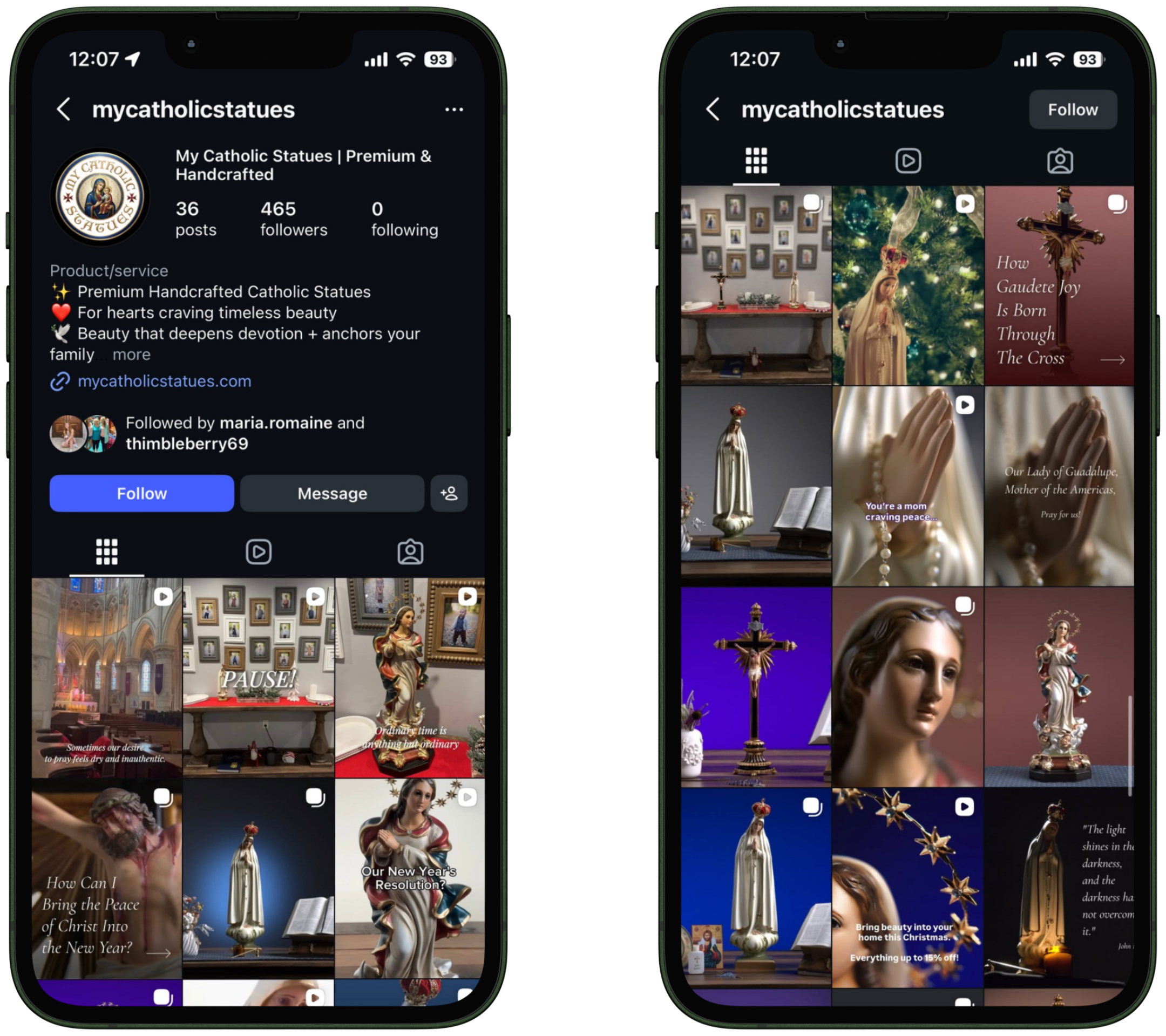
A strong example of this in action is My Catholic Statue’s newly launched Instagram presence. Their visuals and messaging clearly reflect their brand foundations as a premium, handcrafted statue company dedicated to deepening devotion within Catholic families, religious communities, and individuals seeking the timeless beauty of the Catholic faith.
Because their mission, audience, and positioning are well defined, every post feels cohesive and intentional. The content doesn’t just showcase products; it communicates purpose. That clarity at the foundational level makes their visual identity and social media presence feel aligned, elevated, and unmistakably theirs.
Clarify your mission, values, and promise
Your mission explains why you exist. Your core values describe how you behave. Your promise is what customers can count on every single time they interact with you. These aren’t the same thing, and confusing them weakens your overall identity.
A neighborhood gym that opened in 2022 might define its mission as helping busy parents in Seattle fit 30 minutes of exercise into their day. That’s specific, actionable, and memorable. Compare that to “we help people get fit.” It’s generic and forgettable.
Mission template: “We exist to [outcome] for [specific audience] in [location or context].”
Values examples:
- Honesty about pricing—no hidden fees, ever
- Locally sourced ingredients from farms within 50 miles
- Fast response within 24 hours to every inquiry
- Sustainability in packaging and operations
- Treating every customer like a neighbor
Promise example: “Same-day responses to every service request made before 4 p.m.”
Your brand promise becomes your accountability mechanism. It’s what customers can hold you to, and it shapes their expectations before they even walk through your door.
Know exactly who you serve
Branding without a defined target audience wastes money and time. A dog-grooming business targeting “everyone with a dog” will struggle to stand out. But one targeting “busy professionals in Chicago who want premium at-home grooming” immediately knows where to advertise, what to charge, and how to speak to potential customers.
Generic marketing reaches no one effectively. Specific marketing builds a loyal customer base.
30-minute audience exercise: Review your last 20 customers. List why they chose you over alternatives. Identify patterns: Are they in a certain age range? Do they live within a specific radius? What problem were they trying to solve? These patterns reveal your actual audience versus who you assumed you were serving.
Example micro-persona: “Sarah, 38, lives in suburban Denver. Works full-time in healthcare, has two kids under 10. Budget: $150–300/month on home services. Finds businesses through Google Maps and neighborhood Facebook groups. Values reliability over lowest price and will pay more for someone who shows up on time.”
When you know Sarah, you know how to write your website copy, where to advertise, and what to emphasize in your brand story.
At Backflip, we take this a step further by developing detailed audience personas. We give them names, backstories, careers, budgets, and personal motivations. This level of specificity helps us step into their world and understand what messaging will genuinely resonate, not just what sounds good in a conference room.
As part of our complimentary marketing consultation, we guide you through this process. Whether you already have defined personas or are starting from scratch, we help you clarify exactly who you are speaking to and what matters most to them.
When you know your audience at this level, your content becomes sharper, your positioning becomes clearer, and your marketing stops guessing and starts connecting.
Define your positioning in your local or niche market
Brand positioning is the space you occupy in your customer’s mind compared to alternatives. It’s not what you do. It’s why someone chooses you over the three other options they found online.
“Fastest oil change in Omaha” is positioning. “Only gluten-free bakery in Charleston” is positioning. “The accountant for freelance designers who hate spreadsheets” is positioning.
Positioning formula: “We are the [type of business] for [target customers] who want [key benefit] without [major pain they currently experience].”
Service business example: “We are the tax accountant for small business owners in Phoenix who want stress-free quarterly filings without surprise fees or confusing jargon.”
Product business example (handmade candle shop launched in 2023): “We are the candle company for design-conscious homeowners who want distinctive scents without synthetic fragrances or generic packaging.”
Your brand positioning should be immediately clear to anyone who visits your website or walks into your space. If a customer can’t explain what makes you different, your positioning needs work.

Turn your brand into a visual identity
Your visual identity (your logo, colors, fonts, and imagery style) makes you recognizable in seconds. When someone scrolls past your Instagram post or sees your business on Google Maps, those visual branding elements trigger instant recognition or get ignored entirely.
The good news: small businesses can build a cohesive visual identity in under a week using budget-friendly design apps and template platforms. You don’t need to hire an expensive agency. You need consistency.
This section focuses on “good enough” visual branding that works across your website, receipts, email signatures, social media platforms, and physical materials like shop signs and packaging labels. Perfect is the enemy of done. Start with simple and consistent.
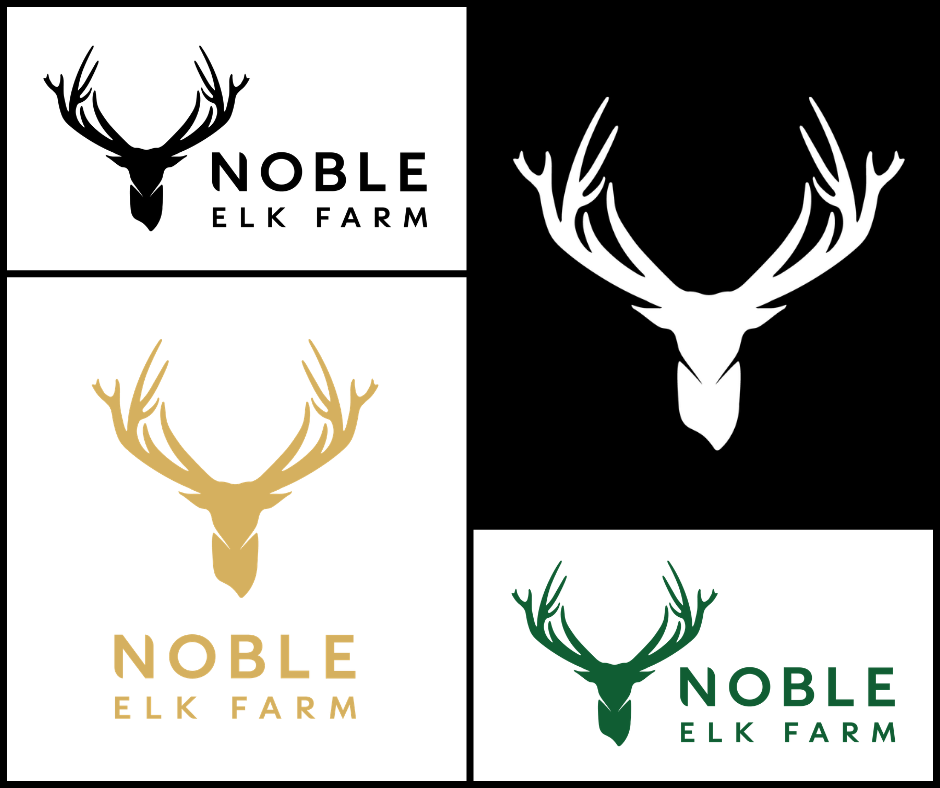
For example, consider the range of logo variations Hannah designed for Noble Elk. The system includes full-color versions with complete typography, as well as simplified black-and-white adaptations. This ensures the brand remains consistent and recognizable across every application, from digital platforms to print materials.
By developing multiple variations from the start, the visual identity becomes flexible without sacrificing cohesion. The result is a brand that works just as effectively on social media as it does on signage, packaging, or promotional materials.
Choose colors, fonts, and a simple logo
Color psychology influences how target customers perceive your business. Blue communicates trust and stability. Blue is popular with accountants, clinics, and financial services. Green signals sustainability and health, common among eco brands launched post-2020. Red creates urgency and energy. Yellow feels optimistic and approachable.
Your color system:
- 1 primary color that appears in your logo and headlines
- 1 secondary accent color for buttons, highlights, and emphasis
- 1 neutral color (white, gray, or soft cream) for backgrounds and text
Your typography:
- 1 main heading font that matches your brand personality (serif fonts feel traditional; sans-serif feels modern)
- 1 simple body font that’s easy to read on mobile screens
Your logo should be legible at small sizes (think 48×48 pixels as a social media icon) and work in black and white for invoices and receipts. Overly complex logos fail these tests.
Files every small business needs:
- PNG for website use (transparent background)
- SVG or PDF for print materials
- Square version cropped for social media profiles
- Black and white version for invoices and receipts
Create a basic brand style guide
Even a 2-page brand style guide prevents future inconsistencies when you hire freelancers, bring on new staff, or create additional branding assets. Without it, your brand image drifts over time as different people make different decisions.
What your style guide should contain:
- Logo usage rules: minimum size, spacing around the logo, what backgrounds it can appear on
- Color codes: HEX values for web, RGB for digital design, CMYK if you print materials
- Font names: exact typefaces and where to use each (headings vs. body text)
- Image style: bright natural light vs. dark and moody, real photos vs. illustrations
- Brand voice examples: how you write captions, emails, and signage
Mini example: For a family-owned pizzeria in Boston, the brand guidelines might specify warm colors (deep red, cream, olive green), casual and friendly language, and photos featuring real customers enjoying meals rather than generic stock photography. The guide ensures a new social media manager posts content that feels consistent with existing customers’ expectations.
Make your brand consistent across every touchpoint
Every interaction, whether phone calls, invoices, packaging, email signatures, or even your Wi-Fi network name, either strengthens or weakens your brand. Brand consistency isn’t about obsessing over details; it’s about removing friction and building recognition.
You can audit most touchpoints in a single afternoon. Search your business name on Google. Check your social media profiles. Look at your printed menus, uniforms, vehicle decals, and receipts. Note every place where your brand shows up differently.
A home cleaning service might discover their text-message reminders sound robotic while their website sounds warm and friendly. A retail shop might realize their Instagram uses different colors than their storefront signage. These inconsistencies confuse potential customers and erode trust.
Align your customer experience with your brand
Your branding elements mean nothing if the actual customer experience contradicts them. A “premium” spa can’t send generic text messages full of typos. A “friendly neighborhood mechanic” shouldn’t explain problems using technical jargon that makes customers feel stupid.
Brand experience must match brand promise.
Touchpoints to refine in 2026:
- Welcome email: Does it reflect your brand personality or read like a template?
- Follow-up text after purchase: Is it warm and helpful or cold and transactional?
- How staff answer the phone: Do they use your business name and a consistent greeting?
- In-store greetings: Are they aligned with whether your brand is formal, casual, or playful?
Sample service script for a casual, friendly business: “Hey there, thanks for calling [Business Name]! This is [Name], how can I help you today?”
Sample script for a professional, polished business: “Good afternoon, thank you for calling [Business Name]. This is [Name] speaking. How may I assist you?”
Ten seconds of consistency in every phone call compounds into a strong brand identity over months and years.
Ensure your website and social media match your identity
In 2026, many customers discover small businesses first through mobile search, map apps, or social media platforms. If these touchpoints don’t reflect your current branding, you’re creating confusion before someone even contacts you.
Consistency checklist:
- Same logo and colors across website, Instagram, Facebook, and Google Business Profile
- Consistent business name and address everywhere (critical for local search rankings)
- Updated profile descriptions using your brand voice and clear positioning
- Current photos that match your brand style rather than outdated images from years ago
- Links that actually work and lead to relevant pages
Before: “We sell statues.”
After: “A Pittsburgh-based maker of premium, handcrafted Catholic statues dedicated to deepening devotion and drawing families closer to the timeless beauty of the faith.”
The difference between these two descriptions is brand positioning. The first could describe any of 10,000 businesses. The second creates meaningful connections with a specific audience.
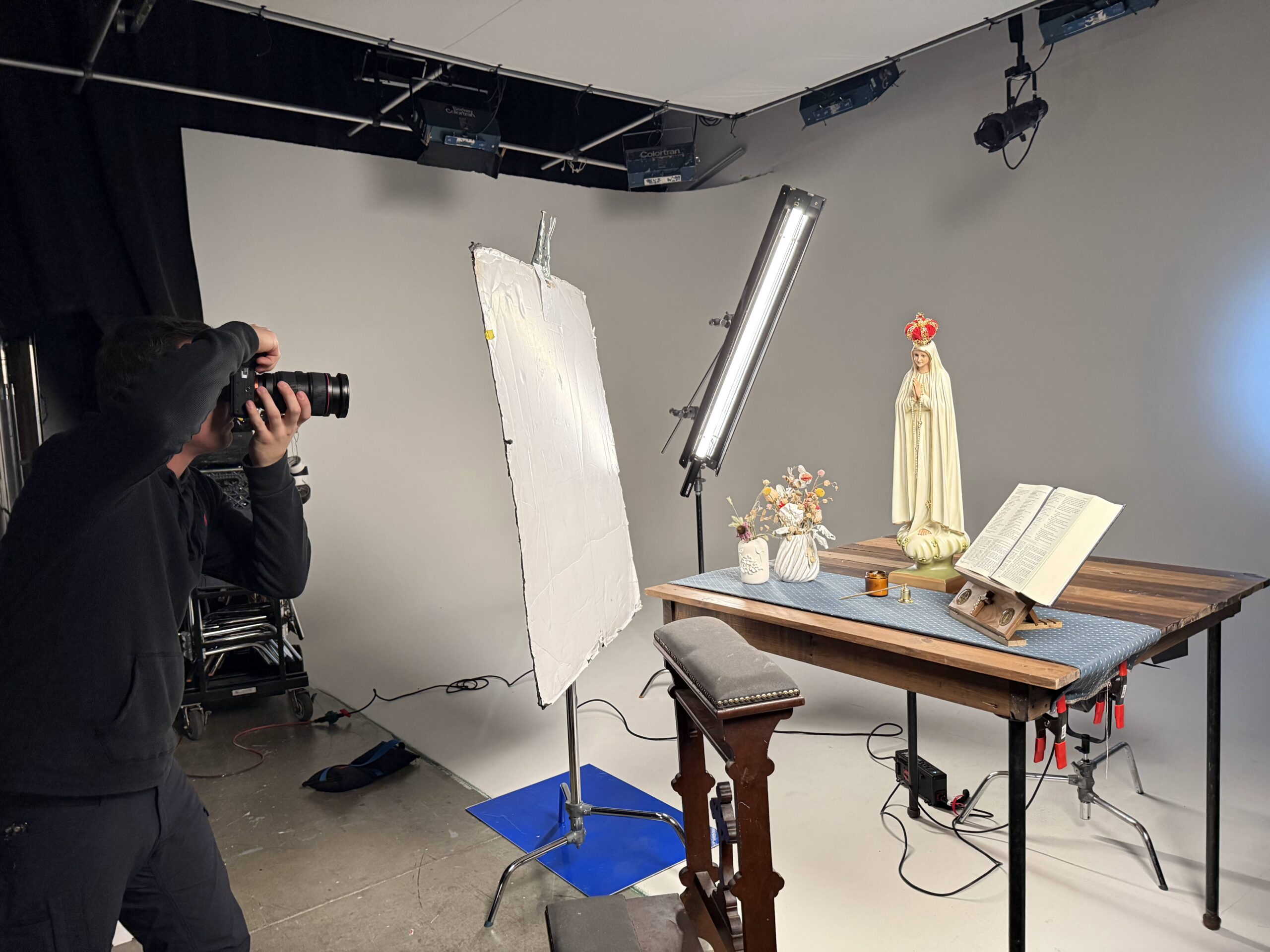
Peep Luke in his natural habitat, carefully capturing product shots of the Our Lady of Fatima statue for My Catholic Statue. Go take a look at their collection. It’s the kind of work that deserves more than a casual scroll.
Budget-friendly branding strategies you can start this month
You don’t need a large marketing budget to build a successful brand. The strategies in this section focus on amplifying your unique identity through content, partnerships, and creative experiences rather than expensive advertising.
These branding ideas work for tight budgets because they leverage what you already have: expertise, relationships with local businesses, and opportunities to create moments worth sharing.
Use content to become the go-to expert
Small businesses can publish short, practical content, such as FAQs, how-to guides, and behind-the-scenes posts, to build authority and attract customers who are searching for solutions. Content marketing positions you as the expert before a prospect ever reaches out.
Concrete content ideas:
- A real estate agent posting a weekly “2-minute market update” video every Monday morning
- A bakery sharing “What we’re baking fresh this Friday” posts with specific dates and photos
- A bike repair shop in Portland publishing seasonal maintenance checklists in spring and fall
- An accountant writing monthly tax tips for freelancers during their first year in business
- A dog trainer posting short videos demonstrating one training technique per week
Manageable formats:
- One blog post per month (500–800 words on a common customer question)
- Two short-form videos per week (30–60 seconds, filmed on a smartphone)
- One monthly email newsletter with tips and updates
Consistency matters more than volume. Posting one helpful piece per week for a year builds more brand visibility than posting daily for two weeks and then disappearing.
Partner with complementary local businesses
Collaborations between non-competing businesses expand your reach without paid advertising. A yoga studio and a smoothie bar in the same neighborhood share overlapping target audiences but don’t compete for the same purchase.
Partnership ideas:
- Joint workshop or mini-event: A pottery studio and a wine shop host a “Sip and Shape” evening, sharing promotion costs and email lists
- Bundled seasonal offers: “Buy a facial at [Spa Name], get 15% off at [Local Florist]” during Mother’s Day 2026
- Co-branded gift guides: Multiple local businesses create a shared holiday gift guide for Small Business Saturday
- Cross-promotion in packaging: A coffee roaster includes a discount card for a local bookstore with every online order
Simple outreach approach: Email a business owner you admire and propose something specific. “I run [Your Business]. I noticed we share similar customers. Would you be interested in a joint [event/offer/feature] around [specific date or occasion]? Here’s what I’m thinking…”
Specific proposals get responses. Vague “let’s collaborate sometime” messages don’t.
Turn everyday moments into shareable experiences
Small touches, such as a handwritten thank-you note on a receipt, a branded sticker on packaging, or a distinctive mural in-store, encourage customers to remember and share your brand. User generated content from happy customers is more credible than any ad you could run.
Photo-worthy setups:
- A distinctive sign or mural in your space featuring your business name and city designed for selfies
- Attractive packaging for orders shipped in 2026 that customers want to photograph and post
- Seasonal decorations that match your design aesthetic (minimalist, playful, rustic, bold)
- A unique element tied to your brand story: the espresso machine your grandmother used, the vintage tools that inspired your business
Caption ideas when reposting customer content:
- “Nothing makes our day like seeing in your home. Thanks for sharing, [customer name]!”
- “This is exactly why we do what we do. Appreciate you, [customer name]!”
- “Real customers, real [city name]. We’re lucky to serve this community.”
Implementation steps:
- Identify one element in your space or packaging that could become photo-worthy
- Add your handle or a simple branded hashtag where customers will see it
- Monitor social media for mentions and reshare with credit
- Thank customers who post. A comment goes a long way toward building loyal customers
Measure and adjust your branding over time
Branding isn’t a one-time project you finish and forget. Your brand should be reviewed at least twice a year using simple, accessible metrics that reveal whether your branding efforts are working.
Small businesses don’t need complex dashboards. Track a few key indicators in a spreadsheet and review them quarterly.
Metrics worth tracking:
- Repeat customers per month (are people coming back?)
- Average order value (are customers spending more as trust grows?)
- Number of referrals (are existing customers recommending you?)
- Website traffic from brand-name searches (are people looking for you specifically?)
- Social media engagement trends (are people interacting with your content?)
Schedule a lightweight “brand review day” once per quarter. Look at the data, review customer feedback, and identify one or two adjustments to messaging or visuals based on what you learn.
Use simple tools and feedback loops
Tools like online survey forms, basic analytics, and review platforms reveal how customers perceive your brand without requiring large research budgets. Customer feedback tells you what’s working and what needs adjustment.
Sample questions to send customers:
- “In a few words, how would you describe our business to a friend?”
- “On a scale from 1–10, how likely are you to recommend us, and why?”
- “What is one thing you wish we did differently?”
The first question reveals whether your positioning is landing. If customers describe you differently than you describe yourself, there’s a disconnect to address.
Example of acting on feedback: A café in 2026 receives repeated customer comments that their menu is confusing. There were too many options with unclear descriptions. They revise the menu to use clearer language aligned with their brand voice (“hearty,” “fresh,” “quick”) and remove items that don’t fit. Customer satisfaction improves, and the brand feels more focused.
Practical steps:
- Add a feedback link to your post-purchase email
- Check Google and Yelp reviews monthly for patterns
- Send a simple survey to your most loyal customers once per year
- Act on what you learn. Feedback without action wastes everyone’s time
Know when to refresh your brand
Small businesses may need to refresh branding after milestones: expanding to a second location, adding a new brand product line, or noticing declining social media engagement over 6–12 months.
Signs a refresh is needed:
- Your logo looks dated (early 2010s design trends)
- Visual identity is inconsistent across platforms
- Customer feedback suggests the brand “looks different everywhere”
- Your positioning no longer matches what you actually offer
- You’ve outgrown your original target audience
Refresh scenario:
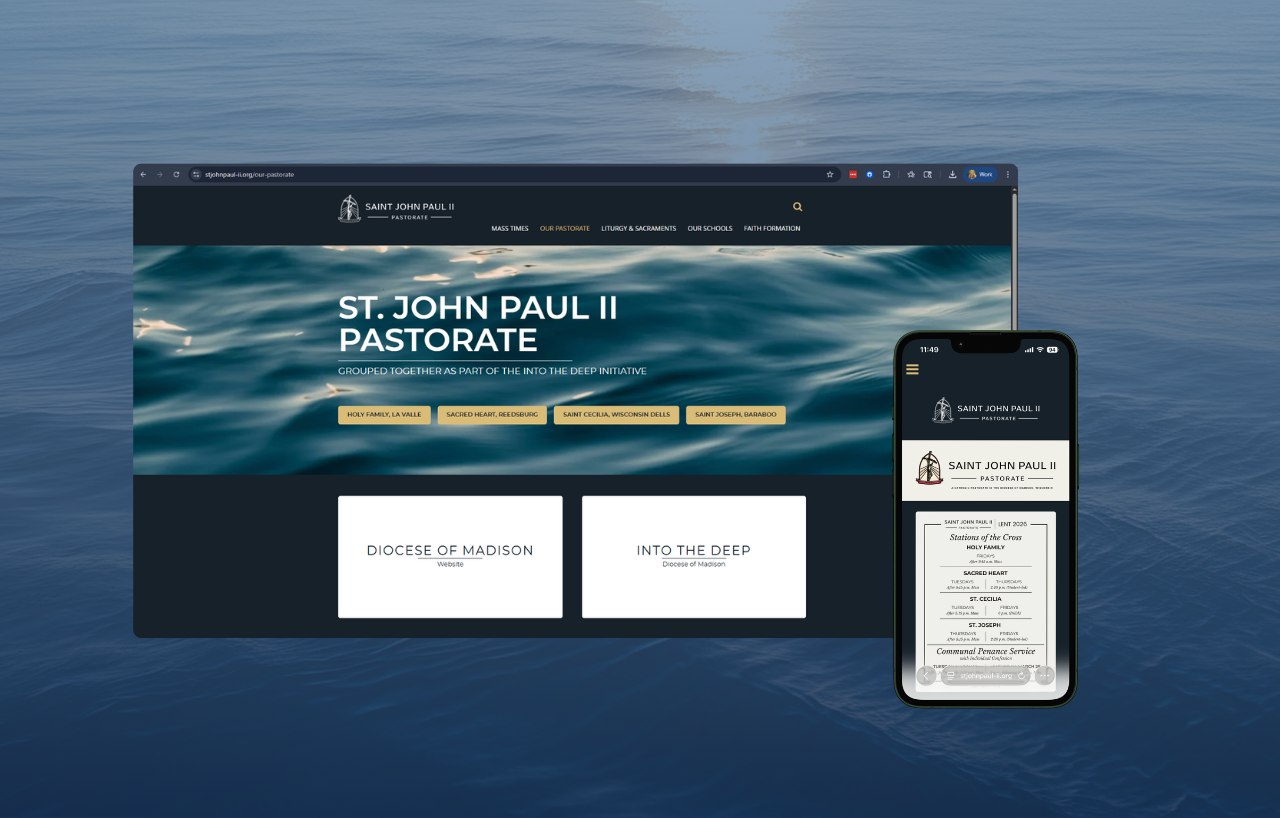
St. Cecilia’s in Wisconsin Dells, St. Joseph in Baraboo, Sacred Heart in Reedsburg, and Holy Family in La Valle were restructured by the diocese into one unified community: the John Paul II Pastorate. What began as four independent parish identities needed to become one cohesive brand.
The rebrand required a new pastorate name, logo, and color palette, along with a shared website that consolidated Mass times, ministries, and communications into one clear, unified platform. Messaging shifted from four separate parish voices to one collective mission, while still honoring each community’s history.
Refreshes can be incremental. Start by clarifying the new structure and visual identity. Then update messaging, photography, and digital systems to reflect that unity. You do not need everything rebuilt overnight. Strategic, phased updates can successfully transition your organization into its next chapter without overwhelming your team or budget.
Below, you can see how the new John Paul II Pastorate identity came to life through a cohesive logo, updated color palette, and a unified website experience. Each element was designed to communicate clarity, unity, and direction while remaining rooted in the tradition and reverence of the individual parish communities.
When visuals, messaging, and structure align, the transition feels intentional rather than disruptive. That alignment is what turns a restructuring into a strong, forward-looking brand.
Bringing it all together for a strong, sustainable brand
Foundations, visuals, consistency, low-cost strategies, and measurement are not separate tasks. They work together to create a resilient small business brand. Your mission informs your visuals. Your visuals appear across every touchpoint. Your touchpoints shape the customer experience. Your measurements reveal whether it is all working.
Branding is an ongoing practice, not a project with a finish line. Showing up consistently in 2026 and beyond means listening to customer feedback, adjusting without losing your core identity, and building an emotional connection that turns first-time buyers into repeat customers.
If you want guidance through this process, Backflip offers hands-on branding and marketing workshops designed specifically for small businesses, parishes, and growing organizations. We walk you through clarifying your mission, defining your audience, developing positioning, and building a practical action plan you can actually execute. The goal is not theory. It is clarity, alignment, and momentum.
Your first 30 days:
Week 1: Define your mission, core values, target audience, and brand positioning. Write them down in a single document.
Week 2: Choose your colors and fonts, and create a simple logo. Draft a one- to two-page brand style guide.
Week 3: Update your website, social media profiles, and key customer touchpoints to match your new brand identity.
Week 4: Launch one content initiative, such as weekly posts or a monthly newsletter, and one partnership or shareable experience.
You do not need a massive budget for good branding. You need clarity about who you serve, consistency in how you show up, and the discipline to measure and adjust over time.
The branding decisions you make this month, including the vision you clarify, the identity you create, and the guidelines you document, will compound into visibility, trust, and revenue growth over the coming years. A strong brand built intentionally today creates a lasting impression that keeps new customers coming and your most loyal customers returning.
Start this week. Define your mission. Know your audience. Show up consistently. And if you want a partner to guide the process, we are ready to help.
Let’s Talk Branding | Book a Free Discovery Call
