Best Platforms for Building an E-Commerce Website

January 5, 2026

With over 20 million online stores operating worldwide and ecommerce sales projected to reach $8.1 trillion by 2026, choosing the right platform to build your ecommerce website has never been more critical (32 Top Ecommerce Statistics For 2025). In this guide to the best platforms for building an ecommerce website, you’ll learn how the difference between selecting the best ecommerce platform and settling for a mediocre solution can determine whether your online business thrives or struggles to compete.
Among the available options, Shopify stands out as among the most popular ecommerce platform globally, hosting over 4 million eShops (Latest Shopify Statistics 2026). As a popular ecommerce platform, Shopify is widely recognized for its user-friendly features, extensive tools, and broad appeal to both beginners and advanced users.
The challenge isn’t finding ecommerce platforms. There are so many ecommerce platforms available that the selection process can feel overwhelming. The real challenge lies in identifying which platform aligns with your specific business needs, technical capabilities, and growth ambitions. Whether you’re a small business owner launching your first online store or an enterprise looking to scale your digital presence, the right ecommerce solution can streamline operations, boost sales, and provide the foundation for sustainable growth.
This comprehensive guide examines the best platforms for building an ecommerce website, analyzing their features, pricing, and ideal use cases. We emphasize the importance of evaluating all the major platforms to ensure you find the best fit for your business. Some of the best free ecommerce platforms are also considered, making it easier for those seeking affordability and accessibility. Additionally, we’ll compare different pricing plans to help you understand cost structures and choose the right subscription option. We’ll help you navigate through hosted ecommerce platforms, open-source solutions, and specialized builders to find the perfect match for your online business.
Top E-Commerce Platforms Overview
The ecommerce platform landscape offers diverse solutions, each targeting different business segments and technical requirements. An ecommerce platform is software for business owners to build an online store and sell products and services online. Understanding the major players helps establish a foundation for making an informed decision. Most ecommerce platforms, or ecommerce software, provide essential tools to manage marketing, sales, and business operations, making them crucial for running a successful online business.
Shopify leads as the most comprehensive ecommerce builder with over 4 million stores worldwide. Its hosted ecommerce software combines ease of use with powerful features, making it the go-to choice for businesses seeking a balance between simplicity and functionality.
WooCommerce powers 28% of all online stores as a free WordPress plugin, making it the most popular ecommerce builder globally. Its open-source nature provides unlimited customization possibilities for those comfortable with WordPress (Woo Commerce Statistics).
BigCommerce offers enterprise-level features with no transaction fees, positioning itself as the scalable ecommerce software alternative for growing businesses that want to avoid the additional costs that plague other platforms.
Wix is one of the most popular website builders, providing a user-friendly drag-and-drop design experience with built-in features that support ease of use and customization. Its built-in marketing tools make it an ecommerce builder targeting small businesses and entrepreneurs who prioritize simplicity over advanced functionality.
Square integrates seamlessly between online and in-person sales, making it an ideal ecommerce builder for retailers who operate both physical locations and digital storefronts.
Squarespace excels in design aesthetics for creative businesses, offering award-winning templates that showcase products beautifully while maintaining professional ecommerce software functionality.

Each platform serves distinct market segments, from individual creators selling digital products to large enterprises managing complex B2B operations. The key lies in matching platform capabilities with your business requirements and growth trajectory.
Shopify – Best Overall E-Commerce Platform
Shopify has earned its reputation as the best ecommerce platform for most businesses through a combination of comprehensive features, reliable performance, and extensive ecosystem support. With over 4.6 million active stores, Shopify proves its value across diverse industries and business sizes.

Key Features and Capabilities
Shopify’s strength lies in its comprehensive feature set that covers every aspect of running an online store. The platform offers over 100 professional themes with mobile-responsive design, ensuring your ecommerce site looks polished across all devices. These customizable themes provide the foundation for creating a professional online store without requiring extensive design skills.
The built-in payment processing system, Shopify Payments, charges competitive rates of 2.9% + 30¢ per transaction while eliminating additional transaction fees. This integrated approach simplifies payment management and provides better rates than using external payment gateways.
Shopify’s app store contains over 8,000 integrations that extend functionality far beyond basic ecommerce features. From email marketing campaigns and automated sales tax calculations to advanced inventory management and dropshipping integration, the ecosystem covers virtually every business need. Shopify also supports integration with popular accounting software, streamlining financial management and reporting for ecommerce businesses.
The platform excels at multi-channel selling, allowing merchants to sell across their ecommerce website, social media platforms, marketplaces like Amazon and eBay, and even in-person through Shopify POS. This unified approach helps businesses reach customers wherever they prefer to shop.
Advanced inventory management features include tracking across multiple locations, automated stock alerts, and integration with fulfillment services. For businesses managing large product catalogs or complex logistics, these capabilities prove invaluable.
Customer support operates 24/7 via chat, email, and phone, with response times typically under two hours for urgent issues. This level of support proves especially valuable for businesses operating across different time zones or during peak selling seasons.
Pricing Structure
Shopify’s transparent pricing model scales with business growth, offering clear upgrade paths as sales volume increases.
The Basic Shopify plan, often referred to as the basic plan, costs $39 per month and includes essential features like unlimited products, 24/7 support, and basic reporting. This entry-level option is suitable for new businesses or those with simple needs, but it lacks some advanced ecommerce functionality found in higher tiers. Compared to Shopify’s other paid plans, the basic plan is more limited in features and customization, making it best for startups just getting started. Shopify’s paid plans, such as the standard and advanced options, expand product listings, enhance customization, and offer additional sales tools for scaling businesses.
Shopify (the standard plan) costs $105 per month and adds professional reports, abandoned cart recovery, and gift cards. Most established small to medium businesses find this plan provides the right balance of features and cost.
Advanced Shopify at $399 per month includes advanced report building, third-party calculated shipping rates, and the lowest transaction fees. Growing businesses with higher sales volumes benefit from these enhanced capabilities.
Shopify’s plans range from $5 to $399 per month, making it one of the more expensive options available.
Shopify frequently offers promotions like a 3-day free trial followed by $1 per month for the first three months, making it affordable to test the platform thoroughly.
One consideration involves additional transaction fees of 2.0% to 0.5% (depending on plan level) if you choose not to use Shopify Payments. For businesses preferring alternative payment processors, these fees can impact profitability.
WooCommerce – Best Free E-Commerce Solution
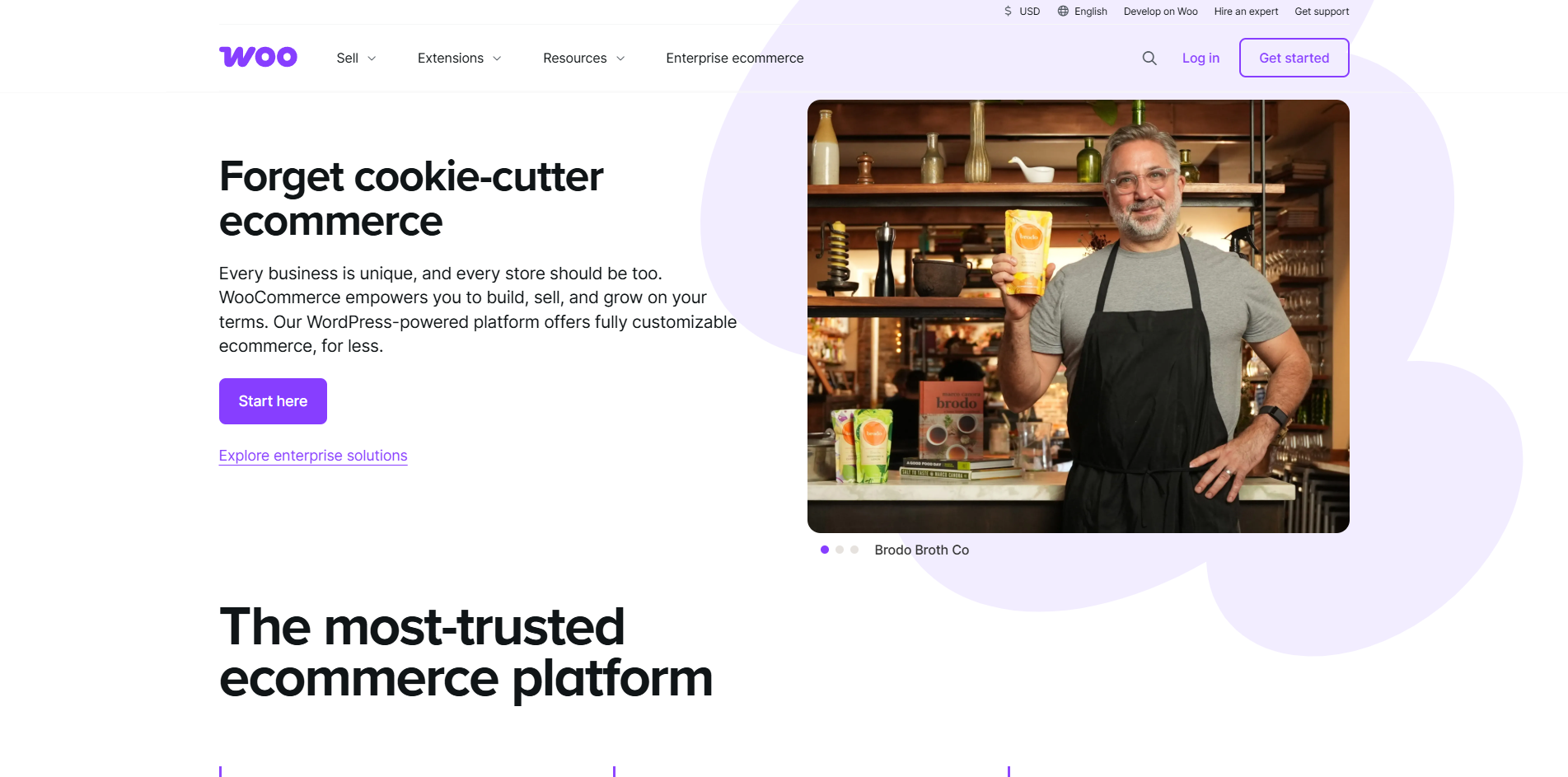
WooCommerce is a free open-source platform that allows users to turn any WordPress site into an eCommerce store. WooCommerce transforms any existing WordPress site into a full-featured ecommerce store, making it the best free ecommerce platform for businesses already invested in the WordPress ecosystem. It is a popular choice for users who want to add ecommerce functionality to their existing site or existing website, rather than starting from scratch. As an open-source solution, it provides unmatched customization flexibility while maintaining cost-effectiveness.
Core Features
The core WooCommerce plugin installs free on any WordPress hosting environment, immediately enabling ecommerce functionality with unlimited products and complete design control. WooCommerce is a free open-source platform that allows users to build an online store, but it requires hosting and a domain name. Users must set up separate web hosting and can choose any web hosting provider for their store. Setting up WooCommerce also involves registering a custom domain, and some hosting providers may include a free domain as part of their package, making it easier to establish a professional online presence. WooCommerce supports selling both physical and digital products, accommodating a wide range of business models. It can handle unlimited storage space, making it suitable for stores with large inventories or extensive digital content. This foundation supports everything from simple digital product sales to complex multi-vendor marketplaces.
Unlike hosted ecommerce platforms, WooCommerce grants access to source code, allowing developers to modify any aspect of store functionality. This flexibility enables custom product types, unique checkout processes, and integrations with virtually any third-party service.
The platform inherits WordPress’s powerful content management capabilities, making it ideal for content-heavy businesses that rely on blogging, SEO-driven traffic, and educational content to drive sales. This combination proves particularly valuable for businesses in industries where thought leadership and content marketing drive purchasing decisions.
Thousands of free and premium themes provide design flexibility, while WooCommerce-specific themes optimize for conversion and mobile performance. Popular theme marketplaces offer options ranging from minimalist designs to complex multi-vendor layouts.
Extensions handle specialized functionality like subscriptions, memberships, bookings, and marketplace features. The ecosystem includes both free community-developed plugins and premium solutions from WooCommerce and third-party developers.
Integration with popular payment gateways occurs through free plugins for major providers like PayPal, Stripe, and Square. This flexibility allows merchants to choose payment processors based on rates and features rather than platform restrictions.
Strong SEO features flow from WordPress’s foundation, with plugins like Yoast SEO providing granular control over metadata, schema markup, and content optimization. This advantage often results in better search engine rankings compared to hosted solutions.
Cost Considerations
While WooCommerce itself costs nothing, building a professional online store requires several investments that add up over time. Unlike many other ecommerce website builders that offer tiered pricing plans, WooCommerce provides a flexible pricing plan structure, allowing you to choose and pay only for the features and extensions you need, which can result in lower overall costs.
WordPress hosting requirements vary significantly based on traffic and performance needs. Shared hosting starts around $10-15 monthly but may struggle with higher traffic volumes. Dedicated WooCommerce hosting from providers like WP Engine or SiteGround ranges from $30-100+ monthly with optimized performance and security.
Premium themes typically cost $50-200 as one-time purchases, though some developers offer annual subscription models. Quality themes often include multiple layout options and extensive customization capabilities.
Essential extensions like advanced payment gateways, subscription management, or multi-language support range from free community versions to $200+ annually for premium solutions. Popular extensions like WooCommerce Subscriptions or Bookings cost around $279 annually.
SSL certificates, security plugins, and backup services add $50-200 annually to ensure secure, reliable operation. Some hosting providers include these features, but dedicated security solutions often provide better protection.
Developer assistance may be necessary for complex customizations, theme modifications, or troubleshooting. Hourly rates for experienced WooCommerce developers typically range from $75-150, though simple customizations might cost $200-500.
While WooCommerce itself is free, it’s important to note that many free plans on other ecommerce platforms come with limitations, such as a cap on the number of products that can be sold. Despite these additional costs, the total investment often remains lower than equivalent functionality on hosted platforms, especially for high-volume stores that would incur substantial transaction fees elsewhere.
BigCommerce – Best for Scaling Businesses
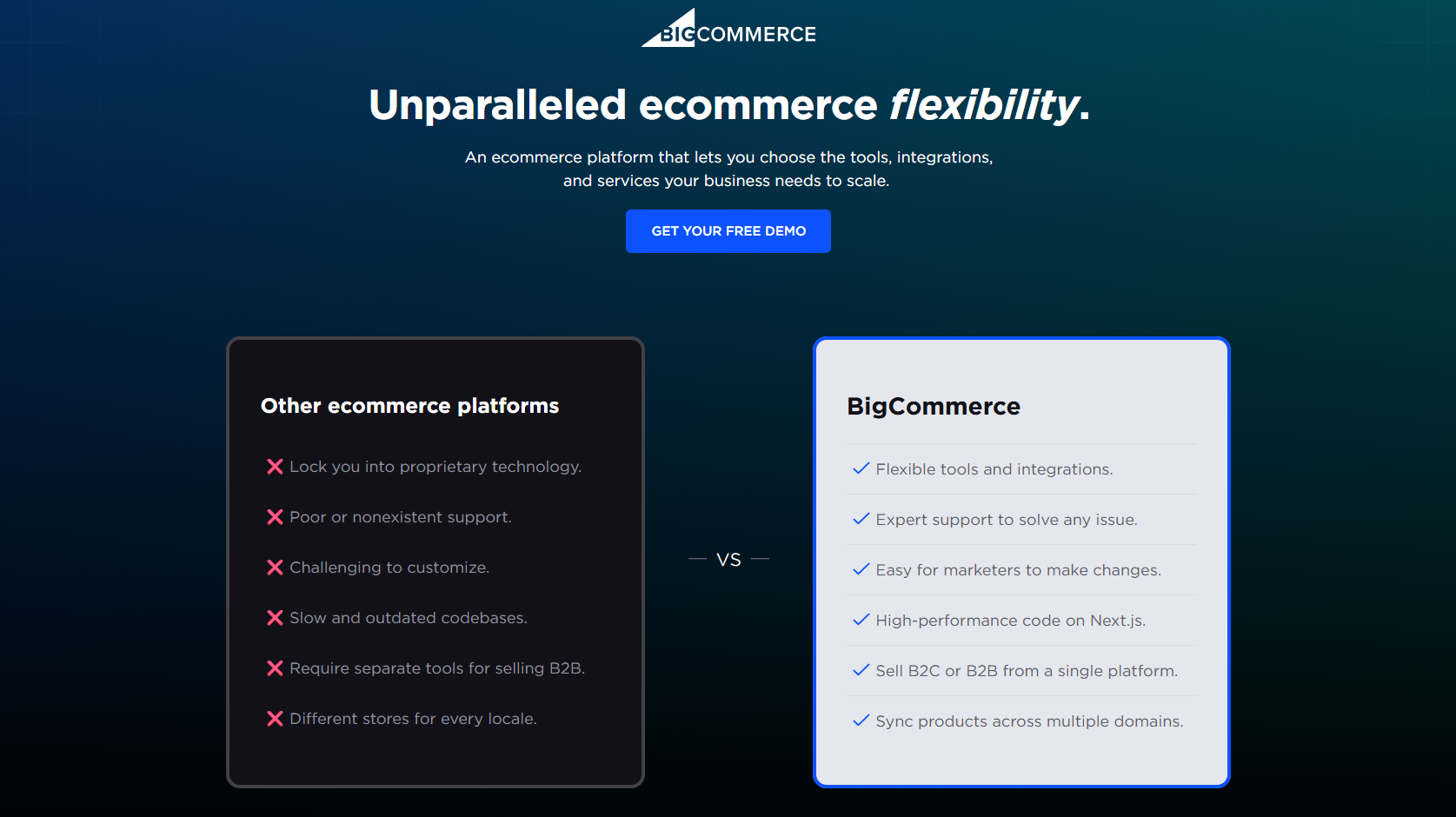
BigCommerce positions itself as the enterprise-ready ecommerce solution that eliminates the transaction fees and limitations that constrain growing businesses on other platforms. Its robust feature set and scalable architecture make it ideal for merchants anticipating rapid growth or complex operational requirements.
Enterprise-Level Features
The platform’s standout advantage involves zero transaction fees regardless of plan level or sales volume. This policy can save thousands of dollars monthly for high-volume merchants who would pay 0.5-2.0% transaction fees on competing platforms.
Built-in multi-channel selling capabilities connect directly to marketplaces like Amazon, eBay, Facebook, Instagram, and Google Shopping without requiring third-party apps. This native integration simplifies inventory management and order processing across multiple sales channels. BigCommerce is especially well-suited for selling physical products, offering integrated shipping solutions and robust inventory management features that make it easy to list, fulfill, and track tangible items.
Advanced B2B features include customer groups with custom pricing, quote requests, purchase order management, and detailed approval workflows. These capabilities enable businesses to serve both B2C and B2B customers from a single platform without compromising functionality for either segment.
The comprehensive API provides unlimited calls and extensive customization possibilities, supporting headless commerce implementations and complex integrations with enterprise systems like ERPs and CRMs. BigCommerce also supports a wide range of business tools for streamlining operations, such as order management, customer notifications, and marketing automation, making it easy to connect with solutions like Zapier.
Built-in analytics and reporting tools offer detailed insights into sales performance, customer behavior, and inventory trends without requiring additional apps or services. Advanced reporting includes cohort analysis, customer lifetime value calculations, and detailed product performance metrics.
Abandoned cart recovery operates automatically across email and SMS channels, with customizable sequences based on cart value and customer segments. Marketing automation extends to product recommendations, customer win-back campaigns, and review collection systems.
Pricing Tiers
BigCommerce’s ecommerce plans scale with annual sales volume rather than feature restrictions, ensuring businesses access full platform capabilities at every level. BigCommerce’s pricing starts at $39 per month, aimed at businesses with higher sales volumes.
Standard ecommerce plan at $39 monthly accommodates up to $50,000 in annual sales with unlimited products, staff accounts, and bandwidth. This entry level includes all core ecommerce features without artificial limitations.
Plus ecommerce plan costs $105 monthly for up to $180,000 in annual sales, adding customer segmentation, abandoned cart emails, and persistent cart functionality. Most growing businesses find this level provides excellent value.
Pro ecommerce plan at $399 monthly supports up to $400,000 in annual sales while adding Google customer reviews, advanced search filters, and custom SSL certificates. High-volume merchants benefit from enhanced performance and conversion features.
Enterprise ecommerce plan offers custom pricing for businesses exceeding $400,000 in annual sales, with dedicated account management, priority support, and advanced customization options.
All ecommerce plans include a 15-day free trial with no setup fees or contracts, allowing thorough evaluation before committing. The sales-based pricing model means businesses only pay more as they grow, aligning platform costs with revenue increases.
Wix E-Commerce – Best for Beginners
Wix ecommerce combines intuitive design tools with essential selling features, making it the best ecommerce website builder for beginners who prioritize simplicity over advanced functionality. Its drag-and-drop interface enables anyone to create a professional-looking online store without technical knowledge.

User-Friendly Features
The drag-and-drop website builder offers over 900 professionally designed templates, many specifically optimized for ecommerce businesses. These templates cover diverse industries and design preferences, from minimalist boutiques to vibrant marketplaces.
Wix ADI (Artificial Design Intelligence) creates customized websites based on simple questions about business type, style preferences, and required features. This AI-powered tool can generate a complete ecommerce site in minutes, providing an excellent starting point for further customization.
Wix supports both online and offline orders, allowing businesses to manage all transactions from a unified dashboard. Users can sell in person at markets or events, as well as sell online through their ecommerce website, making it easy to integrate physical and digital sales channels.
Built-in email marketing and social media tools integrate directly with the website, enabling automated campaigns, customer segmentation, and cross-platform promotion without requiring third-party services. These marketing features help small businesses compete effectively despite limited resources.
The mobile app allows store management from anywhere, including order processing, inventory updates, and customer communication. This flexibility proves valuable for busy entrepreneurs managing multiple responsibilities.
Automated tax calculations handle US sales tax requirements automatically, reducing compliance burdens for domestic sellers. While international tax support is more limited, the automation covers most small business needs.
An integrated booking system accommodates service businesses selling both products and appointments. This dual functionality suits businesses like salons, fitness studios, or consultants who combine physical products with service offerings.
Limitations and Pricing
Wix’s product limit of 50,000 items across all plans accommodates most small to medium businesses but may constrain large-catalog operations. However, on its lower-tier and basic plans, Wix limits the number of products you can sell, making it less suitable for larger inventories. Additionally, template changes require rebuilding the entire site, making initial template selection crucial.
Wix’s ecommerce plans start at $29 per month, which is standard for the industry. The Core plan is the basic plan for Wix ecommerce, costing $29 monthly with basic ecommerce features, including secure checkout, inventory management, and basic marketing tools. This entry level suits businesses testing ecommerce waters or maintaining simple product lines, but its limitations—such as product caps—may not meet the needs of growing stores.
Business at $36 monthly adds customer accounts, abandoned cart recovery, and logo removal, providing better professional appearance and customer experience features.
Business Elite costs $159 monthly with priority support, advanced analytics, and marketing automation. This premium level includes features typically requiring separate apps on other platforms.
All ecommerce plans include hosting, security, and basic marketing tools, providing good value for businesses seeking all-in-one solutions without managing multiple service providers.
Square Online – Best for Omnichannel Retail
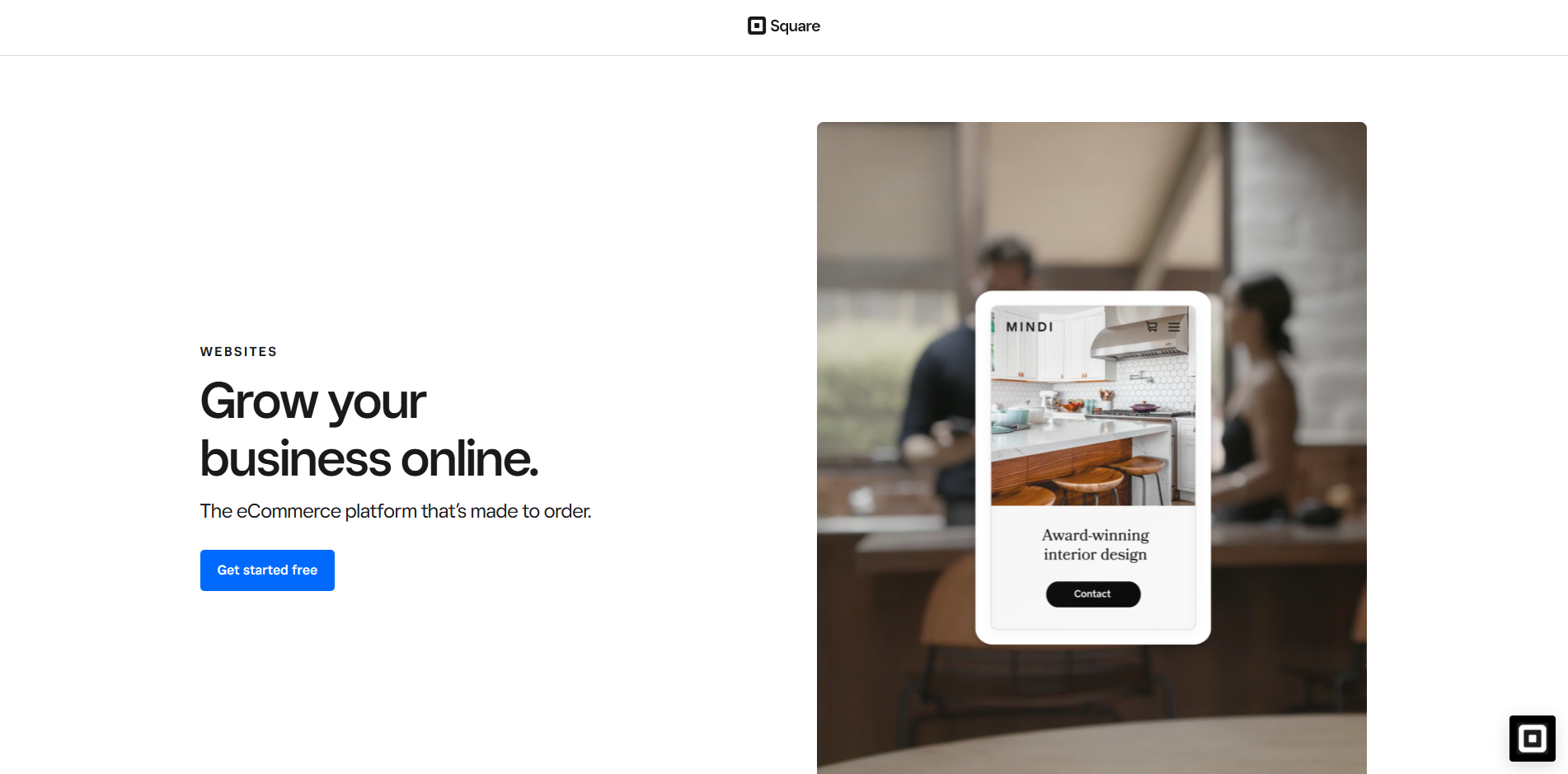
Square Online is an ecommerce builder that excels at bridging online and offline sales channels, making it the optimal choice for retailers operating both physical locations and digital storefronts. Its seamless integration with Square’s point-of-sale ecosystem creates unified inventory and customer management.
Additionally, Ecwid offers a free plan with limited features, making it a good option for small businesses looking to start selling online.
Integrated Sales Features
The free plan provides complete ecommerce functionality with Square branding, enabling businesses to start selling online immediately without upfront costs. This zero-cost entry point makes testing online sales risk-free for established offline retailers.
Square Online supports a variety of business tools for order management and marketing, allowing seamless integration with solutions like Zapier to automate notifications and streamline operations.
Real-time inventory synchronization between online and POS systems eliminates overselling and maintains accurate stock levels across all channels. Inventory updates made at physical locations automatically reflect on the ecommerce site and vice versa.
Square Online allows businesses to sell both physical and digital products from a single platform, making it easy to manage merchandise, downloads, or subscriptions in one place.
Unified customer management combines online and in-person customer data, creating comprehensive profiles that include purchase history, preferences, and contact information. This 360-degree view enables personalized marketing and better customer service.
Built-in appointment booking integrates with Square’s scheduling tools, allowing service businesses to manage both product sales and appointment bookings from a single interface. This proves particularly valuable for businesses like salons, spas, or professional services.
Social media selling integration extends beyond basic product catalogs to include Instagram Shopping, Facebook Shops, and native social media checkout processes. These integrations capture sales from social media engagement without directing customers away from their preferred platforms.
The professional plan removes Square branding for $29 monthly while maintaining all free features, providing a branded experience that builds customer trust and recognition.
Squarespace – Best for Design-Focused Stores
Squarespace earned its reputation through award-winning templates and design-centric approach, making it the best ecommerce platform for businesses where visual presentation drives purchasing decisions. Creative professionals, luxury brands, and design-conscious retailers particularly benefit from its aesthetic excellence.

Design and Marketing Features
Award-winning templates prioritize visual impact while maintaining functional ecommerce capabilities. Each template undergoes rigorous testing for mobile responsiveness, loading speed, and conversion optimization, ensuring beautiful designs don’t sacrifice performance.
Built-in SEO tools include automatic sitemap generation, meta tag management, and structured data markup. These features help search engines understand and rank ecommerce content effectively, though customization options are more limited than specialized SEO platforms.
Integrated email marketing campaigns provide professional templates, automated sequences, and detailed analytics within the same interface used for website management. This integration simplifies marketing workflows and maintains design consistency across touchpoints.
Squarespace provides unlimited storage space, supporting stores with extensive content and product catalogs. Unlimited products on all ecommerce plans remove artificial restrictions that constrain growth on competing platforms. Notably, Squarespace offers unlimited products from its cheapest plan, which is a significant advantage for growing businesses. Combined with unlimited bandwidth and storage, this scalability supports business expansion without platform limitations.
Advanced shipping and tax options include real-time carrier rates, location-based shipping rules, and automated tax calculations for multiple jurisdictions. These features ensure accurate pricing and shipping costs for customers worldwide.
Business plan at $18 monthly includes basic ecommerce features but charges 3% transaction fees. Commerce plans starting at $26 monthly eliminate transaction fees while adding advanced features like abandoned cart recovery and advanced analytics. The Advanced Commerce plan at $40 monthly includes subscription products and advanced shipping options.
Best Platform by Business Type
Selecting the right ecommerce platform depends heavily on business model, target audience, and operational requirements. Understanding which platforms excel for specific business types streamlines the decision-making process and prevents costly migrations later.
For example, the best website builder for small businesses may prioritize ease of use and integrated marketing tools, while the best ecommerce builder for large enterprises will focus on scalability and advanced customization. Some of the best free ecommerce platforms are especially suitable for startups and small businesses looking to launch online stores with minimal upfront investment. Additionally, Hostinger is known for its affordability, offering ecommerce features at a low monthly cost, making it an attractive option for budget-conscious entrepreneurs.
Best for Small Businesses and Startups
Shopify provides the optimal balance of features and simplicity for most small businesses and startups. Its comprehensive feature set grows with the business while maintaining user-friendly interfaces that don’t require technical expertise. The extensive app ecosystem ensures additional functionality becomes available as needs evolve. Many hosting providers, such as Bluehost, often include a free domain with their plans, making it easier and more affordable for small businesses to get started.
Square Online offers an attractive entry point for businesses testing ecommerce viability. The free plan provides full selling capabilities without ongoing costs, making it ideal for startups with limited budgets or seasonal businesses that need flexible cost structures. As businesses grow, upgrading to paid plans unlocks advanced ecommerce features, expanded product listings, and enhanced customization options.
Wix suits small businesses prioritizing design flexibility and built-in marketing tools over advanced ecommerce features. Its intuitive interface enables quick setup and customization without developer assistance, though growth limitations may necessitate platform changes as businesses scale.
GoDaddy is recognized for its simplicity and affordability, making it suitable for casual sellers who want a straightforward and budget-friendly ecommerce solution.
Key considerations for small businesses include transaction volume impact on monthly fees, ease of setup and management, available customer support, and growth potential within the platform ecosystem.
Best for Large Enterprises
BigCommerce is an ecommerce software solution that eliminates transaction fees that can cost enterprises thousands monthly while providing unlimited API calls and extensive customization capabilities. BigCommerce is an enterprise e-commerce solution used by multinational companies, offering powerful features for small businesses as well. Its enterprise features support complex operations without requiring expensive add-ons or custom development.
Shopify Plus is another ecommerce software option, offering enterprise-grade features starting at $2,300 monthly, including advanced automation, dedicated support, and enhanced security. The platform handles massive traffic spikes and provides tools for managing multiple brands or international operations.
Adobe Commerce (formerly Magento) is a highly customizable ecommerce software for businesses with complex requirements and dedicated development teams. Its modular architecture supports sophisticated B2B operations, multi-store configurations, and advanced pricing rules.
WooCommerce is an ecommerce software that scales effectively for enterprises comfortable managing hosting infrastructure and security requirements. The platform’s flexibility enables unique customizations while maintaining cost-effectiveness for high-volume operations.
Enterprise platform selection typically involves longer evaluation periods, proof-of-concept implementations, and consideration of total cost of ownership over several years rather than simple monthly subscription costs.
Best for Developers and Tech-Savvy Users
WooCommerce is a popular ecommerce builder for developers, providing complete control over every aspect of the ecommerce experience through direct access to source code, database structures, and hosting configurations. Developers can implement any conceivable customization or integration while maintaining cost-effective operations.
Magento Commerce is another powerful ecommerce builder for developers, offering advanced features for those comfortable with complex platforms. Its modular architecture and extensive API support enable sophisticated customizations for businesses requiring unique workflows or extensive integrations.
Custom development on headless commerce platforms allows complete front-end control while leveraging robust ecommerce backends. This approach suits businesses requiring unique user experiences or complex integrations with existing systems.
API-first platforms like BigCommerce and Shopify Plus provide extensive programmatic access while maintaining hosted convenience. This balance enables significant customization without the operational overhead of self-managed hosting.
Technical users often prioritize customization flexibility, API capabilities, and development community support over ease-of-use features that benefit non-technical users.
E-Commerce Platform Cost Breakdown
Understanding the true cost of ecommerce platforms requires examining multiple expense categories beyond advertised subscription fees. Most eCommerce platforms charge a monthly fee, which can range from free to several hundred dollars depending on the pricing plan you choose. Pricing plans typically vary in cost and features, with paid plans offering expanded product listings, enhanced customization, and additional sales tools compared to free or basic options. Total cost of ownership includes platform fees, transaction costs, add-ons, development, and opportunity costs that accumulate over time.
Monthly Platform Fees
Entry-level options, often called the ‘core plan’ or ‘basic plan’, typically range from $20-40 monthly for basic ecommerce features, including hosting, security, and essential selling tools. The ‘basic plan’ is suitable for small businesses with limited product catalogs and simple operational requirements, but often lacks advanced ecommerce functionality. Notably, Hostinger is recognized for having the best pricing among eCommerce website builders, with plans starting as low as $3.99 per month.
Professional plans cost $75-150 monthly and add advanced features like abandoned cart recovery, detailed analytics, and enhanced customization options. Most established small to medium businesses find these plans provide optimal feature-to-cost ratios.
Enterprise plans range from $300-2,500 monthly for large businesses requiring advanced features, dedicated support, and unlimited scalability. These plans often include priority support, enhanced security, and advanced automation capabilities.
Free options exist with significant limitations through platforms like Square Online and WooCommerce core installations. While these reduce direct costs, businesses often invest more in customization, hosting, and additional services to achieve professional functionality.
Transaction and Payment Fees
Standard credit card processing averages 2.9% + 30¢ per transaction across most platforms, though rates vary based on card type and processing volume. These fees apply regardless of platform choice and represent the largest ongoing expense for most online businesses.
Additional platform transaction fees of 0.5-2% apply when using external payment processors instead of platform-native solutions. BigCommerce eliminates these fees entirely, while Shopify charges varying rates based on subscription level.
PayPal integration typically costs 3.49% + 49¢ per transaction across platforms, higher than integrated payment processing but necessary for customers preferring PayPal checkout experiences.
Some platforms offer graduated pricing that reduces fees as monthly volume increases, benefiting high-volume merchants but providing limited value for smaller businesses.

How to Choose the Right E-Commerce Platform
Selecting the best ecommerce platform requires systematic evaluation of business requirements against platform capabilities. When comparing different ecommerce software or ecommerce builder options, analyze current needs, project future growth, and understand the true costs associated with different solutions. The best e-commerce platforms help you grow revenue and offer a better customer experience.
Essential Features to Consider
Product catalog size and complexity requirements determine whether simple inventory management suffices or advanced features like variants, bundling, and custom attributes become necessary. Businesses selling configurable products or large catalogs need platforms supporting sophisticated product management.
Payment gateway options impact both customer experience and processing costs. Evaluate supported payment methods, processing rates, international payment capabilities, and integration complexity for preferred providers.
Inventory management needs vary dramatically between dropshippers, multi-location retailers, and service providers. Consider requirements for stock tracking across locations, automated reorder points, and integration with fulfillment services or existing inventory systems.
Mobile responsiveness affects customer experience and search engine rankings. Ensure platform templates and customization options maintain functionality and performance across devices, particularly for businesses targeting mobile-first audiences.
SEO capabilities influence organic traffic potential and long-term marketing costs. Platforms vary significantly in URL structure control, metadata customization, schema markup support, and technical SEO features that affect search engine visibility.
When evaluating the best platforms for building an e commerce website, pay close attention to built-in features, as these comprehensive tools and functionalities support ease of use, customization, and business growth. Additionally, the best e-commerce platforms offer a range of integrations with other apps and services to streamline business operations.
Marketing tools integration determines how effectively you can nurture leads and retain customers. Consider built-in email marketing, social media integration, abandoned cart recovery, and compatibility with existing marketing automation systems.
Customer support availability and quality become crucial during technical issues or high-sales periods. Evaluate response times, support channels, and whether assistance includes technical guidance or just platform-specific help.
Budget and Scalability Planning
Calculate total cost of ownership including platform subscriptions, transaction fees, app or extension costs, premium themes, and developer assistance over a three-year period. This comprehensive view prevents unexpected expenses and budget overruns.
Consider growth potential and upgrade paths within each platform ecosystem. Migration between platforms costs time and money while risking data loss and customer confusion, making initial platform selection critical for long-term success.
Evaluate time investment requirements for setup, maintenance, and ongoing optimization. Platforms requiring significant technical involvement may offer cost savings but demand substantial time commitments that impact business operations.
Factor in developer costs for necessary customizations, integrations, or performance optimizations. Even user-friendly platforms may require professional assistance for complex requirements or unique business needs.
Test platforms thoroughly using free trials to evaluate actual usability, performance, and feature effectiveness before committing to long-term contracts or extensive customization investments.
Summary: Choosing Your E-Commerce Platform
The best platforms for building an ecommerce website vary significantly based on business model, technical capabilities, and growth objectives. However, several clear patterns emerge from comparing leading solutions across different use cases. It’s essential to consider all the major platforms before making a decision, as each offers unique strengths for different business needs.
Shopify offers the best balance of features, ease of use, and ecosystem support for most businesses. Its comprehensive functionality, reliable performance, and extensive app marketplace provide solutions for diverse requirements while maintaining user-friendly interfaces that don’t require technical expertise. For many, Shopify stands out as the best ecommerce builder for scalability and ease of use.
WooCommerce provides maximum flexibility and cost-effectiveness for businesses comfortable with WordPress and willing to invest time in setup and maintenance. Its open-source foundation enables unlimited customization while eliminating transaction fees and subscription costs, making it a top choice for those seeking the best website builder for customization.
BigCommerce excels for growing businesses seeking enterprise features without transaction fees. Its robust built-in capabilities reduce dependence on third-party apps while providing scalability for high-volume operations.
Square Online serves retailers with existing offline operations who need unified inventory and customer management. Its seamless POS integration and free entry point make testing online sales risk-free.
Wix and Squarespace suit businesses prioritizing design and simplicity over advanced functionality, particularly creative professionals and smaller operations with straightforward selling requirements.
When choosing your ecommerce solution, start by evaluating your budget constraints and technical skill level, then match platform capabilities to your specific business requirements and growth plans. Most platforms offer free trials, making it valuable to test 2-3 options thoroughly before making final decisions. Robust analytics are important as you grow, so be sure the platform you choose reports on your metrics effectively.
Consider long-term scalability and migration complexity during the selection process, as changing platforms later involves significant time, cost, and risk. The right platform should accommodate both current needs and anticipated growth while providing reasonable upgrade paths as your online business evolves.
Success with any ecommerce platform ultimately depends on execution, marketing effectiveness, and customer service quality rather than platform features alone. However, choosing the right foundation ensures these efforts aren’t constrained by technical limitations or excessive costs that prevent business growth.
Marketing and Promotion for E-Commerce Websites
Look, we’re not going to sugarcoat it, dropping an ecommerce website into today’s digital chaos and hoping people just find you? That’s not a strategy, that’s wishful thinking. Whether you’re working with some popular ecommerce website builder or you’ve gone full custom (brave soul), your success isn’t about having the prettiest site. It’s about getting people to actually show up, stick around, and—here’s the wild part—actually buy something. And that means you need a marketing game that actually works, not just looks impressive in a PowerPoint.
Search engine optimization (SEO) is where the magic starts, and we’re not being dramatic here. Think of it as the difference between opening a store on a busy street versus hiding it in an abandoned mall. When you optimize your content, product descriptions, and meta tags with keywords like “ecommerce website builder”, “best ecommerce website”, and “online store”, you’re basically putting up neon signs that Google can’t ignore. Sure, it’s not the flashiest part of marketing, but it’s the foundation that everything else builds on. Most ecommerce platforms throw in some SEO tools these days (because they know you need them), making it easier to handle the technical stuff while you focus on what really matters—connecting with real people who want what you’re selling.
Social media marketing is where things get interesting, and honestly, where a lot of people either nail it or completely miss the point. Facebook, Instagram, Twitter, they’re not just digital billboards for your products. They’re conversation starters. When you create content that actually resonates and use hashtags like #ecommerce and #onlinestore strategically (not just slapped on randomly), you’re building relationships, not just pushing inventory. And here’s the beautiful part, many ecommerce builders now sync directly with social platforms, so you can sell where people are already hanging out. Because convenience beats complexity every single time.
Email marketing might sound old-school, but it’s still the workhorse of ecommerce, and we’ll fight anyone who says otherwise. Building an email list isn’t just collecting addresses, it’s creating a direct line to people who’ve already said “yes, I’m interested.” With personalized newsletters, product updates, and those exclusive offers that make people feel special, you’re not just sending emails. You’re building trust. Most of the best ecommerce platforms include email tools now (thank goodness), so you can automate the follow-ups, segment your audience like a data scientist, and actually see what’s working. Pro tip, incentives like discounts or free shipping don’t hurt either.
Paid advertising is your accelerator, but only if you know what you’re doing. Google Ads, Facebook Ads, they’re powerful, but they’re also happy to take your money whether your campaigns work or not. The trick is getting laser-focused on demographics, interests, and search intent. Bidding on keywords like “best ecommerce platform” or “free ecommerce platforms” means you’re catching people when they’re actively looking for solutions. It’s especially clutch for new businesses that need momentum yesterday, not next quarter.
When you’re choosing an ecommerce website builder, here’s what really matters, not just the pretty templates or the low fees, but the marketing muscle behind it. The best ecommerce website builders like Shopify and Wix aren’t just giving you a storefront, they’re handing you a complete marketing toolkit. SEO optimization, email marketing, social media integration, all from one dashboard because juggling seventeen different platforms is nobody’s idea of fun. These features aren’t just nice-to-haves, they’re the difference between looking professional and actually being professional.
Here’s the truth about ecommerce success, beautiful websites are great, low transaction fees are nice, but without a solid marketing strategy, you’re basically running a very expensive hobby. SEO, social media, email marketing, paid advertising, they work best when they work together, not as random tactics you throw at the wall. Take advantage of those built-in marketing tools that modern ecommerce platforms offer, because they’ve done the heavy lifting so you can focus on what you do best. Whether you’re starting scrappy with a free platform or going all-in on a professional setup, the right marketing strategies will help your ecommerce site cut through the noise and actually connect with the people who need what you’re selling. And honestly? That’s when the real fun begins.
Selling in Person and Online
In today’s retail world, you either sell everywhere your customers are, or you watch competitors eat your lunch. The smart ecommerce website builders get this, they’re not just building websites, they’re building solutions that actually make sense for how people really shop. Because let’s be honest, your customers don’t care whether they’re buying from your store, your website, or your pop-up stand. They just want it to work.
Here’s what actually matters, real-time inventory management that doesn’t lie to you, automated sales tax calculations that won’t get you in trouble with the IRS, and payment gateways that actually process without drama. Whether you’re ringing someone up face-to-face or they’re clicking “buy now” at 2 AM in their pajamas, these tools need to work, not just look pretty on a demo.
The game-changers? Point-of-sale systems that sync with your online store like they were meant to be together. One sale, one dashboard, one source of truth. No more playing inventory detective or trying to figure out why your numbers don’t add up. Accept payments, update stock, manage customer data, all from one place, because life’s too short for complicated spreadsheets and manual updates.
A unified ecommerce solution isn’t just nice to have, it’s your competitive edge. You’ll stay on top of orders without losing your mind, avoid those cringe-worthy “sorry, we’re out of stock” moments, and actually simplify your accounting instead of making it worse. Pop-up events, brick-and-mortar shops, online-only hustle, whatever your game plan, the best platforms give you the tools to win wherever your customers decide to show up.
Selling Physical Products Online
We believe selling physical products online isn’t just about throwing up some product photos and crossing your fingers, it’s about building something that actually works. Something that makes shopping feel natural, trustworthy, and maybe even enjoyable for your customers. With so many ecommerce platforms fighting for your attention, choosing the right website builder is honestly the make-or-break moment. The best ecommerce platform? It gives you themes that don’t look like every other store on the internet, marketing tools that actually move the needle, and inventory features that turn the usual juggling act into something resembling a well-oiled machine.
Already running a WordPress site? Then WooCommerce is probably calling your name, and for good reason. This platform lets you add a full-featured store without burning everything down and starting over. We’re talking real flexibility here, the kind that lets you shape your store to fit your brand, not the other way around. Payment gateways? Check. A massive plugin library for everything from shipping nightmares to marketing wins? Double check. WooCommerce is perfect for businesses that want total control and aren’t afraid to grow into something bigger. Because sometimes you need a platform that grows with you, not against you.
Now, if you want to get moving fast, and honestly, who has time for technical headaches, Wix ecommerce is where it’s at. That drag-and-drop builder, those customizable themes, all those built-in features that just work right out of the box? It’s like they actually thought about what small business owners need. Plus, the marketing tools are built right in, so you can promote your products without feeling like you need a marketing degree. Wix gets that small businesses want to sell stuff, not become web developers.
Here’s where things get real, inventory management. This is where most platforms either shine or completely fall apart. Shopify? It shines. We’re talking advanced inventory tracking, automated tax calculations that don’t make you want to cry, and shipping integrations that actually integrate. These aren’t just features, they’re sanity savers that keep you from overselling, under-delivering, and losing your mind in the process. And their customer service doesn’t leave you hanging when things go sideways. Sometimes you need a platform that lets you focus on growing your business instead of troubleshooting it.
Small businesses deserve better than platforms that nickel-and-dime them into bankruptcy. That’s why we love seeing platforms like Wix, Shopify, and BigCommerce actually design with small businesses in mind. Affordable pricing? Yes. Interfaces that don’t require a computer science degree? Absolutely. Customer support that responds in this decade? Thank goodness. These platforms get that you need everything, themes, payment processing, shipping solutions, without the enterprise-level headaches.
And can we talk about search engines for a second? Because what’s the point of a beautiful store if nobody can find it? The best ecommerce platforms come loaded with SEO features that help you optimize product descriptions, meta tags, and URLs so you actually show up when people search. It’s not enough to build it anymore, you’ve got to make sure they can find it. With the right SEO strategy and marketing tools, you turn random browsers into actual buyers. That’s what moves the needle.
At the end of the day, selling physical products online is about more than just having a website, it’s about choosing the right platform, optimizing for search engines, and using tools that actually drive sales instead of just looking pretty. Whether you’re building on WordPress with WooCommerce, launching fast with Wix, or scaling up with Shopify, there’s definitely a solution that fits your needs and budget. With this many solid ecommerce platforms out there, you can create something that stands out and keeps customers coming back. Because the only thing worse than no online store is a terrible online store that drives customers away.
Ecommerce Features and Tools
When you’re hunting for the best ecommerce website builder, don’t fall for the shiny object syndrome. It’s not about the flashiest platform or whoever’s screaming about rock-bottom monthly fees. The real deal? It’s about the features and tools that actually work, because a gorgeous site that can’t handle basic selling is like a sports car without an engine. Pretty, but useless.
First things first: customizable themes and templates aren’t negotiable. Your professional online store needs to stand out, not look like every other cookie-cutter site on the internet. The heavy hitters, Shopify, Wix, BigCommerce, they get this. They offer themes you can actually tweak without needing a computer science degree. Which means you can launch something that looks polished and distinctly yours, whether you’re slinging digital downloads, handmade pottery, or the next big tech gadget. No coding headaches required.
Now, payment gateway options. Here’s the thing: your customers want to pay how they want to pay. Period. PayPal, Stripe, credit card, whatever floats their boat. The right ecommerce solution doesn’t make you choose. It gives you options. Multiple payment gateways mean you never lose a sale because someone’s preferred method got left out. And here’s a pro tip: watch those transaction fees like a hawk. Some platforms love to sneak in extra charges that’ll nibble away at your profits when you’re not looking.
Inventory management tools are where the magic happens. Whether you’re juggling five products or five thousand, you need a system that actually works. Stock tracking, automatic updates, zero “oops, we’re out” disasters. The best ecommerce website builders make inventory feel effortless, so you can focus on growing your business instead of drowning in spreadsheets. Trust us, your sanity will thank you.
Here’s where it gets interesting: marketing features. Built-in marketing tools, email campaigns, social media hooks, SEO optimization, that’s what separates the pros from the wannabes. These features help you pull in new customers, keep the existing ones happy, and drive sales without hiring an entire marketing army. Look for platforms that let you automate the boring stuff, run killer promotions, and connect with your people across every social channel that matters.
Automated sales tax and shipping integrations might sound boring, but they’re absolute lifesavers. The right platform handles sales tax calculations for you, no more midnight math sessions, and plays nice with shipping providers to streamline everything. Fewer headaches for you, smoother experience for your customers. It’s a win-win that actually matters.
Don’t sleep on user-friendly interface and reliable customer service. Even the most sophisticated features are worthless if you can’t figure them out, or if you’re abandoned when things go sideways. The best ecommerce website builders are built for real humans, with dashboards that make sense and support teams that actually support you when the chips are down.
When you’re drowning in ecommerce platform options, stay focused on what matters: the features and tools that’ll help you start selling, manage efficiently, and scale smartly. Consider your tech comfort level, what you’re actually selling, and your budget, monthly fees, transaction costs, the whole picture. The right ecommerce platform isn’t just a website builder. It’s the foundation of your entire online empire.
Bottom line? Do the work. Compare everything. Choose the ecommerce solution that gives you the features, flexibility, and support you actually need to build something great. With the right tools backing you up, you’ll be ready to launch, scale, and dominate in the online sales game. Also, you might actually enjoy the process. Because building a successful online business shouldn’t feel like pulling teeth.
________________
Check out Our Shop!
And peep some of our partners’ ecommerce websites below!
________________
Book a free marketing consultation today!
